Caffeine in Pre-Workout: How Much Is Too Much?

If you train after work or first thing in the morning, there is a good chance you have wondered about caffeine in pre-workout and whether the scoop you are taking is sensible. Labels vary widely, flavoured powders hide how strong they are, and many people also drink coffee, tea or energy drinks on the same day. This guide explains how to add it all up, what official UK and European guidance says, and how to choose between a stimulant and a stimulant-free formula.
Caffeine in Pre-Workout: How Much Is Safe in a Day?
The most widely quoted figures come from the European Food Safety Authority (EFSA) and are echoed by the NHS. For healthy adults, EFSA's scientific opinion put 400 mg of caffeine across the whole day as a level that does not raise safety concerns, and single doses of up to about 200 mg as likewise unproblematic. The NHS advises pregnant women to keep to no more than 200 mg a day. These are general guides, not personal prescriptions, and individual tolerance differs a lot.
The important word is "whole day". A pre-workout serving counts towards the same total as your morning coffee, a cup of tea, a cola or an energy drink. If your powder lists a high amount per scoop, there is not much room left for anything else.
What Does Caffeine Actually Do Before Training?
There is one authorised statement worth knowing: caffeine contributes to increased alertness and to improved concentration. Under the GB register, this applies where a food provides at least 75 mg of caffeine per serving. That is the extent of the claim for mental effects, and it is not the same as saying a product will improve your lifts or make a session feel easier.
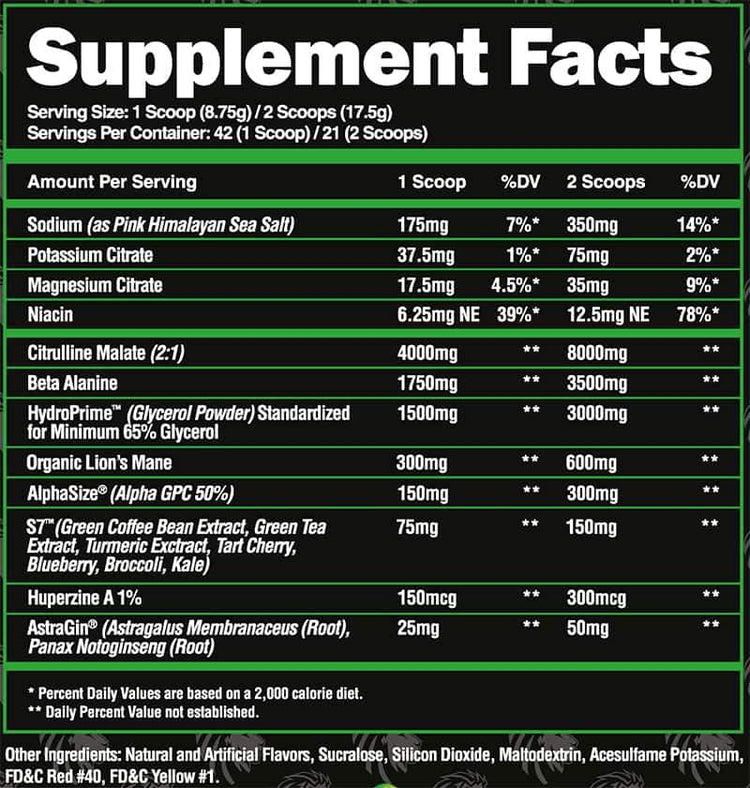
Other ingredients you often see alongside caffeine, such as citrulline, beta-alanine, taurine and arginine, have no authorised health claim in Great Britain. Research has explored them in various settings, and studies suggest mixed results, but a label or a blog post cannot promise a performance outcome from them.
How to Work Out Your Pre-Workout Caffeine Dose
Start with the label, then add up the rest of your day. A simple way to do it:
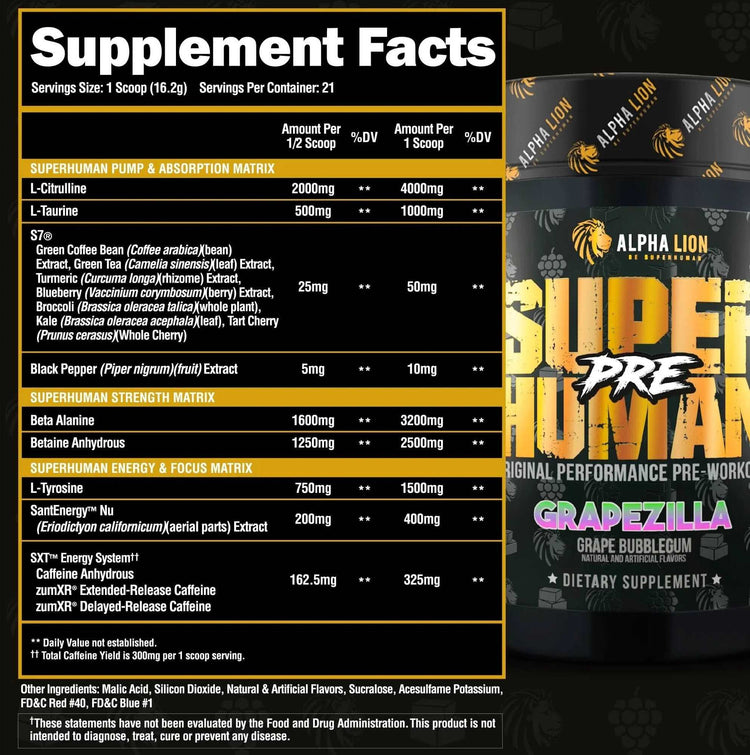
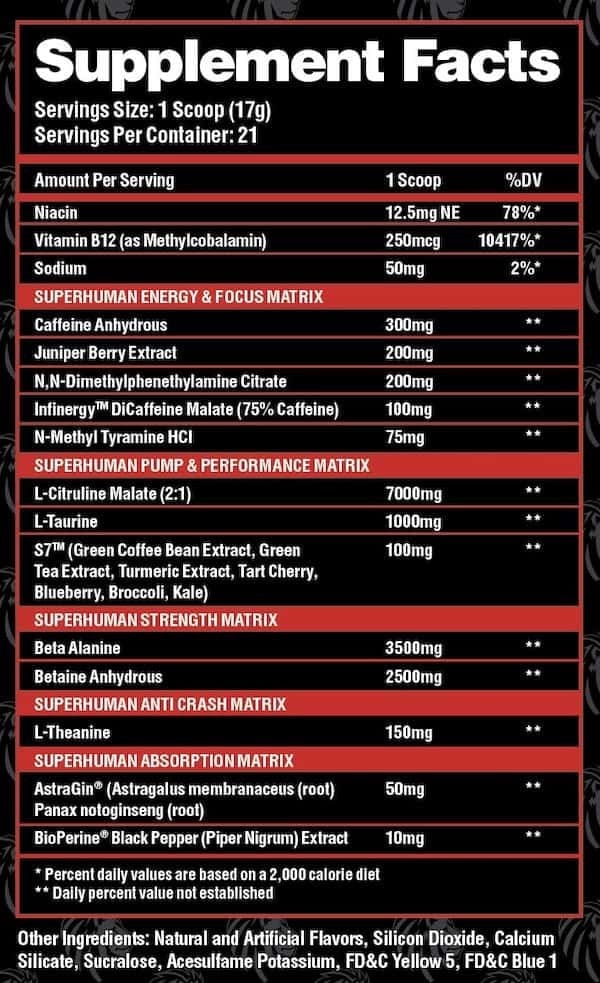
- Find the caffeine per serving on the tub, and check whether a full scoop is the stated serving or whether it is a half-scoop on the first day.
- Add caffeine from coffee, tea, soft drinks and any other supplement you take.
- Compare the total with the 400 mg a day guide, and remember that anyone sensitive, pregnant or taking medication may need to stay well under it.
If a product does not state its caffeine content clearly, treat that as a reason to look elsewhere. Reputable sports nutrition products list it, and some carry third-party testing marks such as Informed Sport, which concerns banned-substance screening rather than how much caffeine is safe for you.
Is It Bad to Take Pre-Workout Every Day?
There is no authorised health claim that makes daily use beneficial, and tolerance builds in many people, so the same dose can feel weaker over time. Taking a few caffeine-free days each week is a reasonable way to keep your total intake in check. If you notice a racing heart, jitteriness, anxiety or poor sleep, reduce the dose or stop and speak to your GP or pharmacist, particularly if you have a heart or blood pressure condition.
Can I Take Pre-Workout in the Evening?
Caffeine stays in the body for hours, and a late session with a strong scoop can interfere with sleep for some people. If you train after about 6pm, a lower dose or a stimulant-free option is often the more sensible choice, since poor sleep works against recovery regardless of what is in your shaker.
Stimulant or Stimulant-Free: Which Suits You?
A high-stimulant formula suits experienced caffeine users who train in the morning or afternoon and have room in their daily total. A stimulant-free formula suits evening trainers, people who are sensitive to caffeine, and anyone who already drinks plenty of coffee. Neither type is automatically better; they simply fit different routines. Read the full ingredient list and serving size either way, because "stim-free" does not mean "effect-free" or "risk-free".
It also helps to remember that a pre-workout is optional. Sleep, a decent meal beforehand and a proper warm-up do more for most people than any scoop.
Choosing a Pre-Workout: Practical Checklist
Before you buy, check the caffeine per serving, the serving size, the other active ingredients and any warnings. Introduce a new product at half a serving to see how you respond. Avoid combining several caffeinated products on the same day, and keep it away from children and teenagers. This article is general information, not medical advice.
Ready to Compare?
Browse our pre-workout supplements to compare caffeine levels and serving sizes, or if you would rather skip stimulants, see the caffeine-free pre-workout range. Always read the label and stay within the guidance above.
Food supplements should not be used as a substitute for a varied, balanced diet and a healthy lifestyle.
Next article